
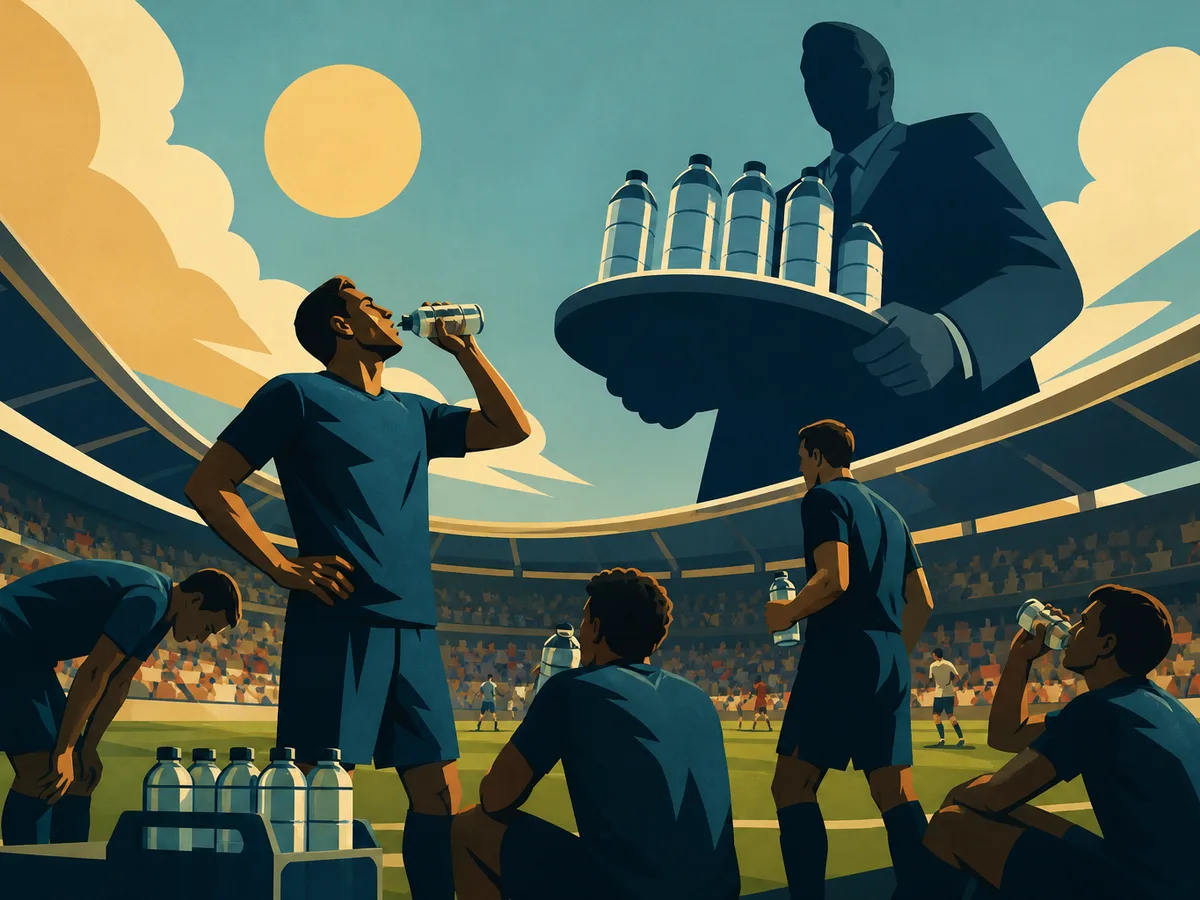
Fifa has included advertising during hydration breaks in its television-rights tender for the 2030 World Cup, giving broadcasters a potential revenue stream before deciding whether the stoppages will return. The Guardian reports that the documents explicitly allow for selling adverts during the breaks, a strong indication that their use remains under serious consideration.
The format introduced at this summer’s men’s World Cup interrupted each half for three minutes across all 104 matches. The Athletic also reports that Fifa has raised the possibility of retaining it for 2030, when Morocco, Spain and Portugal will host most games, with three fixtures in South America.
Fifa sources told the Guardian that the tender documents cover all potential options. The governing body maintains that no decision has been made and declined to comment further. Broadcasters are therefore bidding with a possible advertising opportunity in view, rather than a guaranteed change to the tournament’s format.
The financial incentive is substantial. According to the Guardian, the Hollywood Reporter estimated that the breaks generated between $2m and $9m in advertising revenue per match this summer. Media sales analyst Guideline put Fox’s total tournament advertising revenue at $835m, against a $485m rights fee. Those figures describe revenue, not profit, but underline why broadcasters would value the extra slots.
Fifa did not receive a direct financial benefit from those adverts in 2026, the Guardian reports. Their anticipated availability could, however, increase what broadcasters are prepared to pay for 2030 rights.
Player welfare remains the stated basis for the stoppages. Fifa adopted universal hydration breaks after heat caused interruptions in about 60% of matches at the 2025 Club World Cup. It argued that applying the same arrangement everywhere protected competitive consistency, even though 31 World Cup matches took place in climate-controlled stadiums.
The tender also references temperature-triggered cooling breaks, leaving more than one approach available. Mandatory hydration breaks will not feature at next year’s Women’s World Cup in Brazil, where cooler conditions are forecast.
Read the Guardian’s report for more on the rights tender and broadcasting revenues, alongside the Athletic’s coverage of the possible return.