
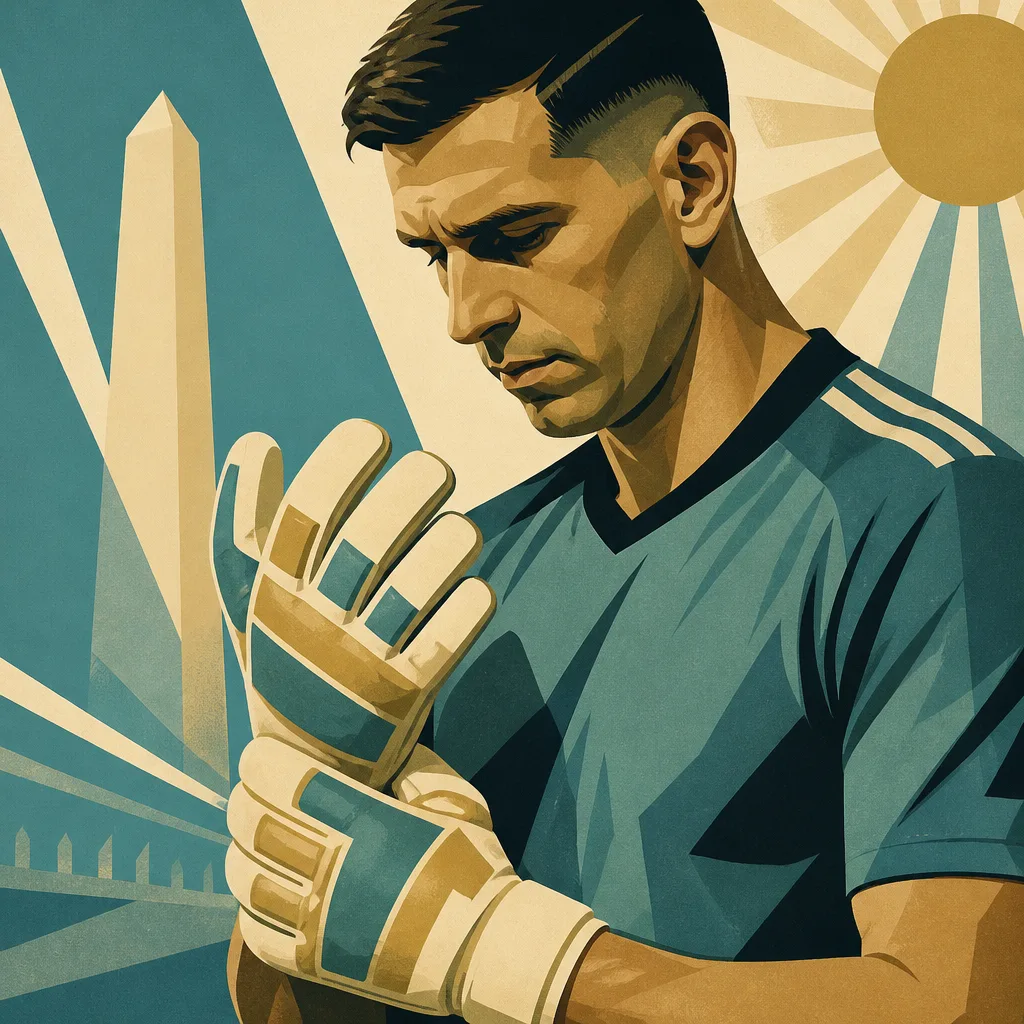
Emiliano Martínez says his injured finger “won’t ever return” to normal. That is the starkest detail in an account that also includes tears, severe pain and the fear of missing Argentina’s World Cup title defence.
Speaking to Argentine journalist Gastón Edul, the goalkeeper described the consequences of playing through a fracture he sustained before the Europa League final. He opted against surgery and continued playing, saying he would “see stars”. He also recalled crying after examining X-rays because he feared the injury would cost him his World Cup place.
The temptation in football is to translate that account immediately into a tribute to toughness. Martínez endured pain to pursue something he valued enormously. But stopping there would strip his testimony of its most important detail: he says the consequences have outlasted the tournament.
For a goalkeeper, a damaged finger is no peripheral inconvenience. Catching, punching and parrying repeatedly expose the hands to impact. The position turns the injured body part into an essential working tool, making the decision to continue more complicated than simply tolerating discomfort while running.
Martínez’s account also illustrates the unusual pressure of an international tournament. A player cannot rearrange a World Cup around rehabilitation. The opportunity arrives on a fixed date, and even an established international cannot assume that another will offer the same role or prospects. That helps explain his choice without making it medically desirable.
His comments do not give us the full clinical picture. They do not establish what advice he received, what alternatives clinicians offered or precisely how surgery would have affected his availability. Any judgement about those decisions needs more than a retrospective interview.
What the interview does provide is the player’s description of the cost. That deserves attention in its own right, rather than as decorative evidence of commitment.
Football celebrates those who play through injury far more readily than it examines what they carry afterwards. Martínez has supplied the uncomfortable second half of that story: the tournament ends, but the body does not necessarily reset.